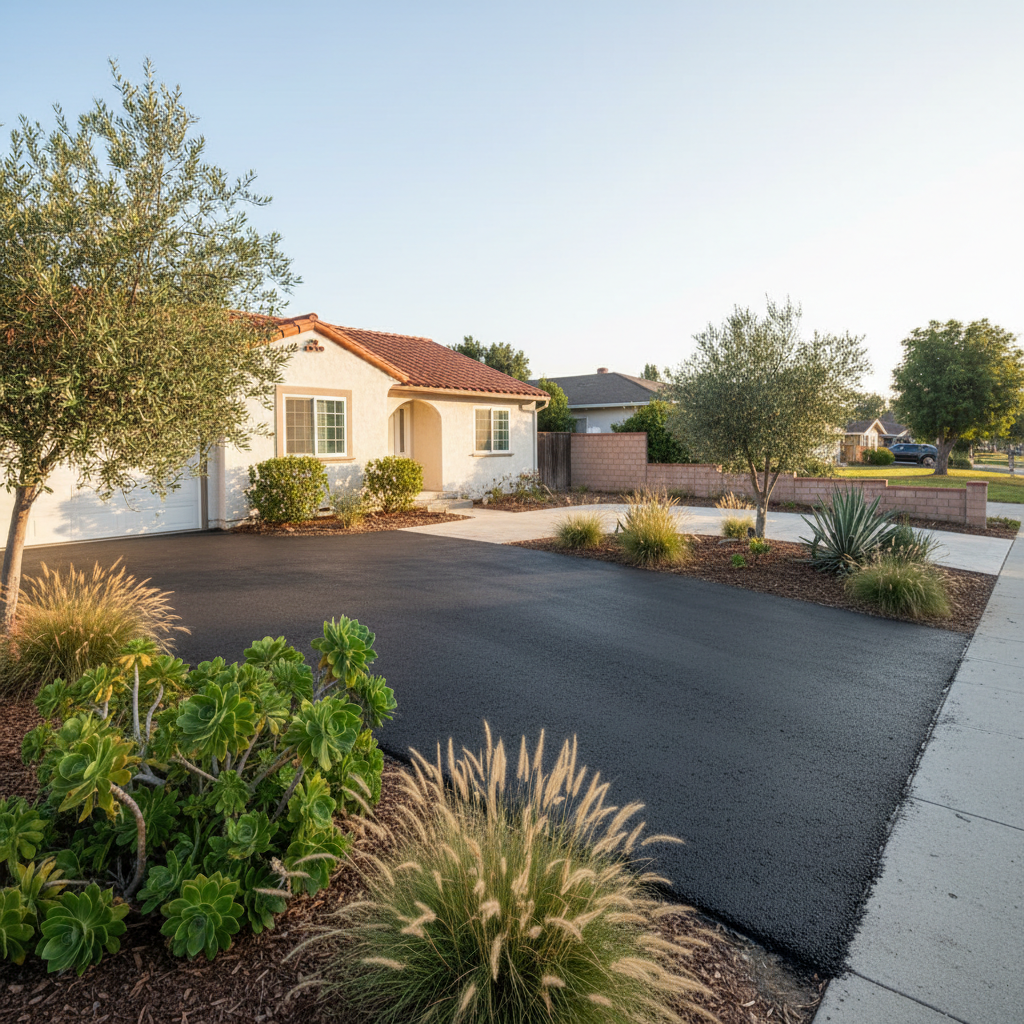
You would not wear a heavy coat to the beach in July, right? The same idea applies to your asphalt. Taking care of your driveway properly means understanding the local weather. Here in La Habra, our climate has its own unique features that directly affect how long your asphalt lasts. It also affects when you should get work done.
Timing Your Asphalt Repairs in La Habra
When it comes to Asphalt Repair, the timing is very important. You cannot just put down new material whenever you want; the weather plays a big role in how well it cures and how well it holds up. Alpha Asphalt Co. has seen many situations. We can tell you that trying to rush a job in bad weather conditions only causes problems later on.
Spring: The Recovery Season
After our mild but sometimes wet winters, spring is usually a good time to check your asphalt. You might see some new cracks or potholes appear from the cooler, wetter months. Spring offers moderate temperatures that are not too hot or too cold. This is ideal for most Asphalt Repair activities. The asphalt mix can be worked correctly, and it cures effectively, giving you a very durable surface. This is a good time to get those winter damages fixed before they become worse. Alpha Asphalt Co. provides Asphalt Repair services in La Habra, CA.
Summer: Hot, But Still Good
Yes, La Habra summers get hot, with August often seeing average highs around 86°F. Asphalt is actually more flexible in hot weather. This is good for things like Crack Sealing and Pothole Repairs. The heat helps with adhesion and a smoother finish. Alpha Asphalt Co. often schedules jobs in the cooler mornings or evenings to avoid the absolute peak heat of the day in La Habra. The consistent warmth means newly laid asphalt cures faster, creating a strong, smooth surface. Just remember that extreme heat can cause asphalt to buckle, ripple, and crack, especially if humidity is also high. Alpha Asphalt Co. provides Asphalt Repair services in La Habra, CA.
Fall: Prep for the Wet Season
Fall is another excellent time for asphalt work in La Habra. Temperatures are cooling down from summer, but they are still warm enough for the asphalt to cure correctly. It is also smart to get any necessary Asphalt Repairs done before our rainy season starts. The rainy season typically runs from November through March in La Habra. Fixing cracks and potholes in the fall prevents water from getting in and causing bigger problems when the rains hit. Alpha Asphalt Co. provides Asphalt Repair services for La Habra, CA homeowners.
Winter: Emergency Only
Winter is not the best time for major Asphalt Repairs unless it is an emergency. Cold temperatures make it difficult for asphalt to cure correctly, and rain can make repairs almost impossible. Our rainy period usually lasts from October to April in La Habra, with February being the wettest month. February averages about 3.1 inches of rain in La Habra. If you have a critical issue that cannot wait, Alpha Asphalt Co. can do temporary fixes. However, for long-lasting results, it is best to wait for warmer, drier weather. Alpha Asphalt Co. provides temporary Asphalt Repair services in La Habra, CA when needed.
Weather Conditions That Affect Asphalt Work
It is not just the season; specific weather conditions really decide what Alpha Asphalt Co. can and cannot do. Asphalt is a temperature-sensitive material. It needs to be placed and compacted within a specific temperature range to get the right density and quality for your La Habra property.
- Temperature: Ideally, Alpha Asphalt Co. is looking for ambient temperatures above 50°F. If it is too cold, the asphalt cools too fast. This makes it stiff and hard to compact properly. This can lead to premature cracking. If it is too hot, the asphalt can become too soft, leading to issues like rutting.
- Rain and Humidity: You cannot pave in the rain. Water is asphalt's enemy. It can prevent proper bonding and lead to failures. High humidity can also affect the sub-base. This can create air gaps and lead to cracks. That is why Alpha Asphalt Co. pays close attention to the forecast, especially during La Habra's wetter months.
- Wind: Strong winds can cool the asphalt mix too quickly. This is similar to cold temperatures. It makes the asphalt harder to work with and properly compact.
Protecting Your Investment Year-Round
Your asphalt driveway is a big investment, and you want it to last. Here is how you can protect it through La Habra's seasons:
- Regular Cleaning: Keep your driveway free of debris, dirt, and oil spills. These can break down the asphalt over time.
- Address Cracks Promptly: Do not let small cracks become big problems. Water getting into cracks is the main cause of asphalt deterioration. This is especially true when water expands and contracts with temperature changes. Even though we do not get hard freezes here in La Habra, moisture still causes damage.
- Sealcoating: This is your asphalt's sunscreen and rain jacket. Sealcoating protects against UV rays, water penetration, and automotive fluids. Alpha Asphalt Co. recommends Sealcoating every 2-3 years to maximize your driveway's lifespan. The best time for Sealcoating is when surface temperatures are above 40°F. This is typically in late spring or summer in La Habra.
- Proper Drainage: This is very important, especially with our clay soils in some parts of La Habra. If water pools on or near your driveway, it will wear away the sub-base. This causes depressions and structural issues. Make sure your gutters are clear, and your landscape directs water away from your asphalt.
By keeping an eye on the weather and following these seasonal tips, you will make sure your asphalt stays in great shape for years to come. If you are ever unsure, just give Alpha Asphalt Co. a call. Alpha Asphalt Co. is here to help you protect your property in La Habra, CA.